
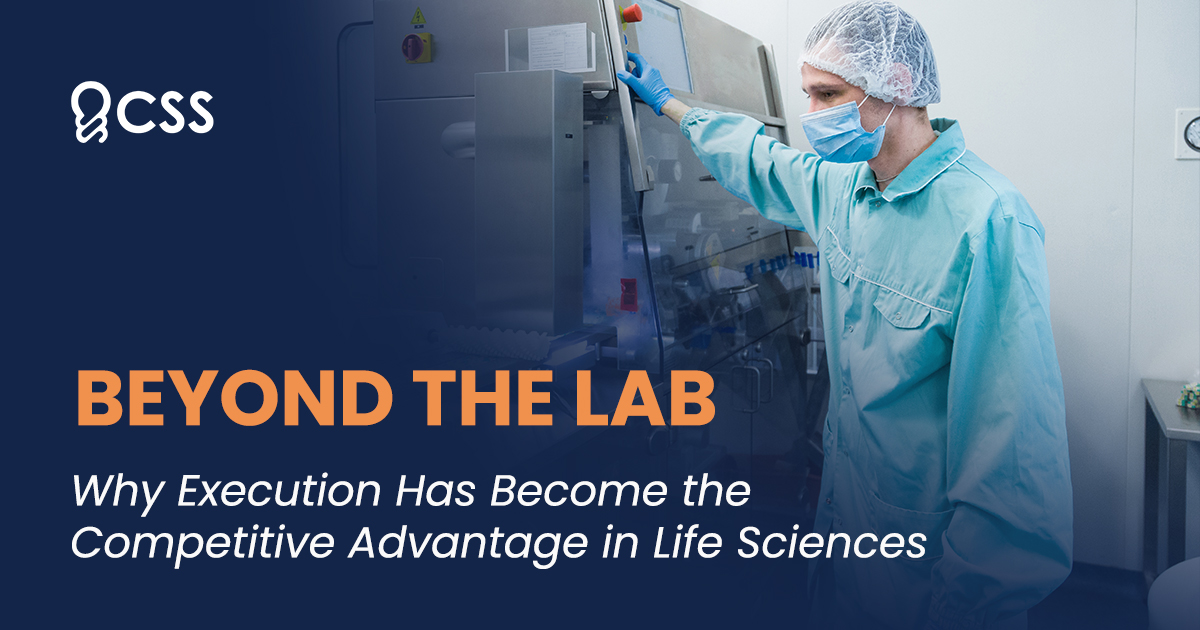
Innovation is accelerating, but so is the pressure to deliver. Today, competitive advantage isn’t defined by who innovates first. It’s defined by who executes most effectively.
Life sciences organizations have no shortage of ambitious initiatives.
Biotech companies continue to invest in next-generation therapies, creating new demands on the biotech workforce and the specialized expertise required to bring innovation forward. At the same time, AI is accelerating drug discovery and clinical research while decentralized clinical trials, manufacturing modernization, and digital technologies continue to reshape how products move from discovery to commercialization.
Deloitte’s Midyear 2026 Life Sciences Outlook notes that organizations remain committed to growth while placing greater emphasis on productivity, disciplined investment, operational resilience, and measuring the value created by AI. The conversation is shifting from simply investing in innovation to ensuring those investments translate into measurable business and patient outcomes.
Whether scaling clinical trial operations, preparing for commercialization, increasing manufacturing capacity, or responding to new regulatory expectations, leaders are being asked to move faster without compromising quality or compliance.
Yet for many organizations, innovation isn’t the biggest challenge.
Execution is.
Moving a therapy, device, or scientific breakthrough from concept to commercialization requires far more than strong research. It demands coordination across clinical operations, regulatory affairs, quality, manufacturing, supply chain, and commercialization, all while navigating evolving regulations, resource constraints, and increasingly aggressive timelines.
The organizations gaining the greatest competitive advantage today aren’t simply making better discoveries.
They’re becoming better at executing them.
Innovation Is Expanding Across the Entire Product Lifecycle
Scientific innovation has always been the engine of the life sciences industry. What’s changing is how many disciplines now influence whether innovation actually reaches patients.
Artificial intelligence is helping researchers identify promising drug candidates, optimize trial design, and improve decision-making across the development lifecycle. At the same time, manufacturers are investing in smarter facilities, more resilient supply chains, and digital technologies that improve operational performance across regulated environments.
This complexity is being reinforced by broader industry trends. IQVIA’s latest Global Trends in R&D research also points to increasing clinical trial complexity, longer development timelines, and greater emphasis on improving clinical productivity – making cross-functional execution more important than ever.
Instead of operating as separate functions, these teams are becoming increasingly interconnected.
Today’s programs require close collaboration across research, clinical operations, regulatory affairs, quality, manufacturing, and commercialization. As organizations expand beyond traditional staffing models, many are looking for partners who can support both the specialized expertise and execution required across the entire product lifecycle.
As innovation expands across the product lifecycle, life sciences workforce planning becomes less about filling individual roles and more about ensuring the right expertise is available at the right stage of every program.
Four Workforce Challenges Life Sciences Leaders Are Navigating
Today’s workforce challenges extend well beyond hiring.
Leaders are balancing scientific progress with operational execution across every stage of the product lifecycle.
Scaling Programs Without Scaling Fixed Costs
Whether expanding clinical trials, strengthening clinical trial staffing, preparing for regulatory submissions, or increasing manufacturing capacity, organizations need access to specialized expertise without adding unnecessary fixed costs.
Different Milestones Require Different Expertise
The skills required during discovery are different from those needed during validation, commercialization, or manufacturing scale-up. Effective life sciences workforce planning has become increasingly dynamic as programs evolve from discovery through commercialization.
Compliance Can’t Become the Bottleneck
Execution quality matters just as much as scientific expertise. Organizations must balance speed with documentation, compliance, validation, and inspection readiness.
Innovation Depends on Cross-Functional Execution
Scientific breakthroughs rarely happen in isolation. Successful organizations align research, quality, regulatory, manufacturing, and commercial teams around shared milestones and measurable outcomes.
Before Your Next Critical Milestone, Ask:
- Do we have the right expertise for this stage of the product lifecycle?
- Where will execution risk have the greatest impact?
- Can outside expertise accelerate progress without increasing permanent headcount?
- Are we building teams around job titles or around program milestones?
Why Life Sciences Workforce Planning Has Become a Competitive Advantage
For many organizations, the question is no longer simply “How quickly can we hire?”
It’s “How do we keep critical programs moving?”
That shift has changed the way leaders think about effective life sciences workforce planning.
Rather than assuming every need requires another full-time hire, organizations are becoming more intentional about where strategic consulting, project-based delivery, or specialized expertise can create the greatest value.
The goal isn’t to replace internal expertise. It’s to give those teams the expertise, capacity, and leadership they need to execute successfully.
Today’s leaders are asking questions like:
- Where would outside expertise create the greatest impact?
- Which initiatives require dedicated project ownership?
- Where can specialized consultants accelerate progress?
- How do we maintain momentum without increasing unnecessary fixed costs?
- How can we strengthen our biotech workforce without increasing permanent headcount?
The conversation has shifted from filling positions to enabling execution.
Increasingly, organizations are combining Life Sciences Consulting, Project-Based Solution Delivery, and Talent-Powered Execution to support different phases of the product lifecycle rather than relying on a single workforce model.
Building Teams Around Programs, Not Positions
Every stage of the product lifecycle places different demands on an organization.
Discovery requires different expertise than commercialization. Clinical development depends on cross-functional coordination to keep studies on track. Regulatory milestones demand precision and documentation. Manufacturing scale-up requires operational discipline, technology transfer, and validation. Commercial launch brings together quality, supply chain, and commercial teams to prepare for market success.
Treating each phase with the same workforce strategy can create unnecessary bottlenecks. The expertise needed to advance a program evolves as the program itself evolves.
Organizations that consistently execute recognize these shifts. Rather than building teams around static job descriptions or permanent headcount alone, they align expertise to the specific needs of each milestone.
That may mean bringing in experienced advisors to help define priorities and reduce execution risk before work begins. It may mean engaging a project team to own a technology transfer, support a remediation effort, or prepare for a regulatory inspection. In other cases, it means adding highly specialized professionals who can integrate seamlessly with internal teams during periods of growth or increased demand.
The strongest organizations don’t rely on a single engagement model. They build life sciences workforce strategies around the needs of the program, giving teams the flexibility to scale expertise, maintain momentum, and keep critical initiatives moving forward.
Supporting Innovation Requires More Than Specialized Talent
Life sciences organizations have never had more opportunities to innovate.
But innovation only creates value when organizations can execute consistently across every phase of the product lifecycle.
The organizations making the greatest progress aren’t necessarily those investing the most. They’re the ones aligning expertise to the right stage of each program, adapting resources as priorities evolve, and bringing together scientific, operational, and regulatory teams around shared goals.
Success isn’t measured by the size of a workforce. It’s measured by how effectively that workforce enables programs to move forward.
What Effective Life Sciences Workforce Planning Looks Like
Organizations that consistently execute share several common characteristics. Rather than reacting to hiring needs as they arise, they take a more strategic approach to aligning expertise with the demands of each program and milestone.
They:
- Build teams around program milestones, not organizational charts.
- Bring in specialized expertise where it creates the greatest impact.
- Balance permanent staff with project-based resources to improve flexibility and control costs.
- Align workforce decisions with execution priorities, not just hiring plans.
- Adjust team structure as programs move from discovery through commercialization.
These practices don’t eliminate complexity, but they help organizations navigate it more effectively. By treating workforce planning as a strategic component of program execution, life sciences leaders can improve agility, reduce execution risk, and keep critical initiatives moving forward.
Conclusion
Scientific innovation will always be at the heart of life sciences.
But as programs become more complex, life sciences workforce planning has become just as important as scientific strategy.
Organizations that consistently move programs forward understand that success depends on more than scientific innovation or hiring talented individuals. It requires thoughtful planning, experienced execution, and access to specialized expertise throughout the product lifecycle.
Whether advancing a clinical program, preparing for a regulatory milestone, expanding manufacturing capacity, or launching a new therapy, the organizations that align the right expertise to the right stage of the product lifecycle will be best positioned to deliver meaningful outcomes.
In today’s life sciences landscape, innovation may spark progress, but execution determines how quickly that progress reaches patients.
Every organization approaches workforce planning differently, but the most successful programs begin with the same question: What expertise do we need to move this milestone forward?
Keep Your Next Milestone Moving Forward
Whether you’re planning your next clinical milestone, preparing for commercialization, expanding manufacturing capacity, or strengthening specialized teams, CSS Scientific helps life sciences organizations align the right expertise to every stage of the product lifecycle through Life Sciences Consulting, Project-Based Solution Delivery, and Talent-Powered Execution.
Whether you need strategic guidance, accountable project delivery, or specialized life sciences professionals, our team works alongside yours to help move critical programs forward with confidence. Talk to a Life Sciences Advisor now.